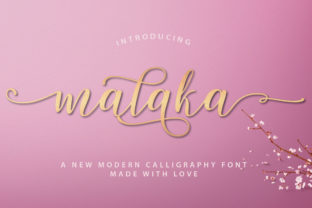
Malaka: A Modern Script Font for Stylish Design
Malaka is a modern script font known for its unique and irregular baseline, which gives it a distinctive and elegant appearance. Designed with a focus on visual appeal, Malaka offers a blend of sophistication and trendiness that makes it ideal for a variety of design projects. Its delicate yet striking style has made it a popular choice among designers looking for a fresh and contemporary look.
What Makes Malaka Unique?
Unlike traditional script fonts that follow a consistent baseline, Malaka features an irregular baseline that adds a sense of movement and dynamism to the text. This characteristic makes it stand out in a crowd, especially when used in designs that require a touch of creativity and individuality. The font also includes stunning alternates and ligatures, allowing users to customize their typography for a more personalized effect.
In addition to its aesthetic appeal, Malaka supports multiple languages, making it a versatile option for international projects. Whether you're designing wedding invitations, greeting cards, or logos, Malaka provides a stylish and adaptable solution that can meet various typographic needs.
Why Someone Might Be Interested in Malaka
Designers and creatives often seek fonts that can elevate their work while maintaining readability. Malaka’s combination of elegance and modernity appeals to those who want to add a unique flair to their projects without sacrificing clarity. Its versatility allows it to be used across different mediums, from digital to print, making it a practical choice for a wide range of applications.
The font's irregular baseline may also attract those looking for something unconventional. For individuals or businesses aiming to create a memorable brand identity, Malaka can serve as a strong visual element that sets their work apart from the competition.
Benefits of Using Malaka
One of the key benefits of Malaka is its ability to enhance the visual impact of any design. Its delicate strokes and fluid lines contribute to a sense of refinement that can make a significant difference in the overall look of a project. Additionally, the availability of alternates and ligatures allows for greater flexibility, enabling users to tailor the font to suit their specific design goals.
Another advantage is its multilingual support, which expands its usability beyond English-speaking audiences. This feature is particularly useful for designers working on global campaigns or projects that require language inclusivity.
Considerations and Tradeoffs
While Malaka offers many advantages, it is important to consider its limitations. The irregular baseline, while visually appealing, may not be suitable for all types of content. In some cases, it could affect readability, especially in long paragraphs or small text sizes. Therefore, it is best used in short-form text where its stylistic qualities can shine without compromising legibility.
Additionally, the font's unique characteristics may require more careful placement and spacing compared to standard fonts. Designers should be prepared to adjust layouts to ensure that the irregular baseline does not interfere with the overall composition.
Situations Where Malaka Is a Strong Fit
Malaka is particularly well-suited for projects that emphasize aesthetics and creativity. Wedding invitations, thank you cards, and greeting cards often benefit from its elegant and trendy appearance. The font can also be effective in logos and business cards, where a distinctive visual identity is essential.
For designers looking to create quotes or social media graphics, Malaka offers a way to convey emotion and personality through typography. Its versatility makes it a valuable asset in both digital and print formats, allowing for seamless integration into various design workflows.
When Alternatives May Be Worth Considering
There are situations where other fonts might be more appropriate. For instance, if the primary goal is readability, a more conventional script font with a consistent baseline may be a better choice. Similarly, for projects that require a minimalist or clean look, a sans-serif or serif font might offer a more balanced approach.
Designers should also consider the target audience when selecting a font. If the intended audience prefers traditional styles, Malaka may not be the best fit. In such cases, exploring other options that align more closely with the audience's expectations could lead to more effective results.
Practical Decision-Making Insights
When evaluating whether Malaka is the right choice for a project, it is helpful to start by defining the design goals. Ask questions such as: What message do I want to convey? What is the intended audience? How important is visual uniqueness compared to readability?
Testing the font in different contexts can also provide valuable insights. Experimenting with various text sizes, colors, and layouts can help determine how well Malaka performs in real-world scenarios. This process can reveal potential challenges and opportunities for optimization.
Ultimately, the decision to use Malaka should be based on a balance between its strengths and the specific requirements of the project. By considering these factors, designers can make informed choices that align with their creative and functional objectives.